How NOT to practice Taffanel & Gaubert!

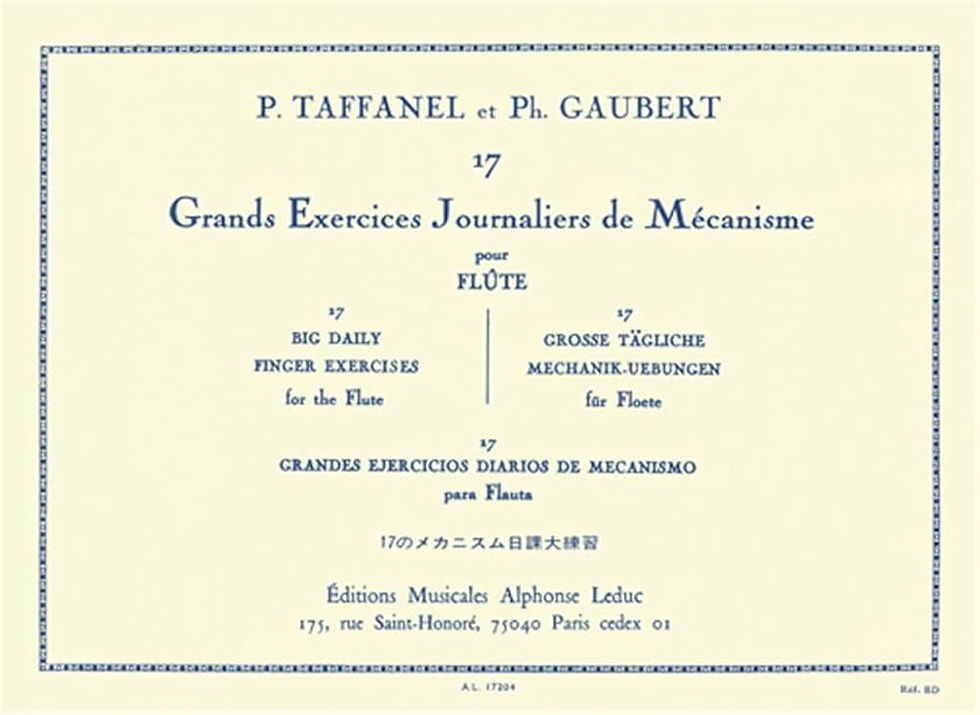
Anyone who is familiar with classical flute study has probably heard of the famous 17 Daily Exercises for Flute by Paul Taffanel and Phillippe Gaubert. This book is the standard technical manual for most professionals and aspiring flutists, alike. Its value is immense as a technical resource, but how can a young student glean the most from its comprehensive pages? Most importantly, how can this book become a trusted companion for any flutist in the entirety of a career? I've been playing through T&G for the past 25 years, and I'm excited to share the secrets to how this book has helped me, challenged me, and kept me technically afloat!
In my post "Technical Mastery," I discussed how Andre Maquarre's 7 Daily Exercises for the Flute has given me a clear advantage in maintaining a fluid technique, even in the busyest seasons of my life. One key ingredient to that success is consistency- playing through this book every day! Another equally important element is the system I learned from my college professor, Jan Gippo ( Piccolo champion and piccoloist with the St.Louis Symphony). He guided me to adopt the "pratice one key area a day" principle. This system was a total game-changer for my technique! Instead of feeling the overwhelming weight of playing through every exercise in every key, I am free to enjoy the exercises in these books within one key area. In this method, I am not choosing my " favorite keys" to focus on, while ignoring the hard ones. I'm also able to play with more depth, listening for intervals and finger fluidity.
While Maquarre's 7 Daily Exercises are important, the T&G 17 Daily exercises are essential! Paul Taffanel taught for years at the Paris Conservatory and was one of the fathers of the French Flute School. He compiled these exercises with the help of one of his most famous students, Philippe Gaubert. These men wisely assessed what skills are the most challenging for any flutist to master, giving us a glimpse into the technical mastery of a seasoned professional. Carefully learning these 17 exercises is a must if any flutist aspires to technical and musical success!
But where to begin? When I first encountered this book, I was truly daunted by what seemed like endless pages of scales, arpeggios, and technical exercises. After some very tedious practice sessions, I was able to discover what NOT to do when using this book.
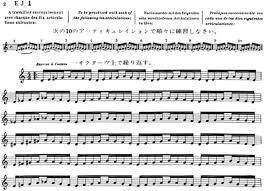
Don't play through every exercise, in every key, in every octave, every day! Many ambitious students will attempt this, and while you may be able to tough it out for a couple of sessions, this type of practicing is not sustainable. You are looking to build a technical warm up and work out that will last you decades, not weeks! The same system that I applied to Maquarre's book easily works with Taffanel and Gaubert. While this means you will be learning these exercises over several weeks ( I spent an entire semester of college only practcing these two books, playing them for my teacher in every lesson- it was grueling!), it also means that once they are carefully studied, the will be invaluable to you. Let me explain.
It's much easiser to focus on small pieces of information at a time than to inundate our brains and fingers with endless patterns. By working slowly through each exercise and focusing on one key relationship each week, you are allowing your brain to integrate these patterns into a deeper part of your memory. This memory, which will be reinforced by daily practice of these patterns, will be there when you are playing your favorite French show piece, interpreting a gorgeous Bach Sonata, or sight reading a contemporary piece written last year. The brilliance of these exercises is that they are comprehensive- these figures, arpeggios, and scales are everywhere in tonal music!
My journey with T& G began by putting a "1" next to all of the first key areas in each exercise. While it's not as tidy as the Maquarre ( Exercise number 1 starts in D Major, not C Major), it still helps you to focus on the sound, the finger accuracy, and the technical challenge of each exercise. A metronome is your best friend during this learning phase! Slow practice is very important for this step, as you are building good habits that will carry you into the future. Once every exercise is learned, I recommend choosing the same key area that you are playing in the Maquarre book- not necessarily the same "number." Yesterday, I played everything in both books in A-Flat Major/ F Minor. Today will be D-Flat Major/ B- Flat Minor, and in this manner I can cycle through all twelve major and minor keys in a matter of days.
The benefits of this book don't end with learning these patterns, but continue as each exercise presents varied articulations and dynamics. Play exercise Number 1 in the third octave, all tongued; or play "slur two- tongue- two" in the low octave with a fortissimo dynamic. There are so many ways to approach each exercise, and I still find challenges in each one after 25 years of study! We'll discuss more specific ways to use this book to work on articulation, especially double tonguing, in a future post.
This introduces a second, equally important thing to avoid while practicing this book. Do NOT skip exercises or cherry pick just a few that are interesting to you! It may be tempting to go straight to Number 4 ( scales), but each of the 17 exercises addresses a different element of your playing and has genuine value. If you are just playing everything in one key, you won't be spending a huge amount of time. This quality- filled practice will ensure that you are working on every area of your flute playing in a consistent, meaningful way.
Finally, there is an important mindset that you should NOT have while working on this book. Do NOT think that this is a quick and easy solution! The reality of progress on any instrument is that it takes...a long time. Our cultural context has given us a desire for immediate reward, but oftentimes our improvement in any instrumental study is painfully slow! While this book is not a shortcut to technical mastery ( because there really isn't such a thing), practicing Taffanel and Gaubert is guaranteed to make you a much better flutist. If you are diligent in your practice and careful as you work, you will sound better tomorrow, next week, next year, and into the next decade. My pursuit of excellence continues each time I pick up my instrument, and I can honestly say that using Maquarre and T& G has given me the technical foundation that I need!
After the hours of daily practice in my undergraduate and graduate degree years ( 1999-2005), I've been able to maintain an active and growing flute career, spanning decades, utilizing this system. Some days, when I had young babies and so many things to juggle, the only thing I could manage on the flute was to play through these books. On busy teaching days, these exercises are touchstones for my technique, keeping me grounded and centered to help me be a better instructor. That consistent and persistent work has made a huge difference for me! If I feel particularily shaky in my technique on certain day, I can choose to play through all of the keys in one of these books. These books have kept my playing technically sound and challenged me to slow down. They help me to maintain a technical fluidity that could otherwise by neglected through lack of time or even ability to focus.
Wherever you are on your flute journey, today is the perfect day to begin working on this amazing technical resource! Whether you are a young student, an emerging professional, or a returning amateur, these 17 Daily Exercises for the Flute by Taffanel and Gaubert will give you the technical confidence and grace to get you to the next level. I'm right there with you!
Happy Practicing!
Jennifer


Comments