Playing the Long Game: Sound Development & Moyse

A beautiful, well-developed sound is one of the benchmarks of a truly professional musician. For woodwind and brass players, playing long tones is a necessary and fundamental aspect of sound development. Even in the beginning years of study, teachers will require their students to play long, sustained notes. But how does this discipline actually create a beautiful sound? What happens when you repeat these exercises over days, months, and even years? Is there a point where playing these is NOT helpful or even detrimental? Furthermore, what are you actually doing as you play these patterns? After nearly 30 years of playing "the long game," I've discovered why these exercises are crucial to developing and maintaining a professional flute sound, as well as how playing them the wrong way can become discouraging and even damaging.
Most flutists will point to Marcel Moyse's De La Sonorite as the gold standard of sound development. His patterns have been copied by many other teachers, but the concept is generally the same: long, chromatic note patterns played in small segments. The patterns themselves are not necessarily that important, but what you are doing while playing them makes all of the difference!

How do we begin? Moyse's first exercise starts on B, which he asserts is an easy note for the flute ( I agree!). As the chromatic scale descends ( or ascends), the student is asked to repeat each section several times, if necessary. This isn't a mindless repetition. Instead, the main goal is the engage your ears to seek out the best sound. If you are practicing these long tones without listening to the end result, it is truly a waste of time!
As you begin, you must imagine what the most beautiful flute sound would be. You should find inspiration by listening to master flutists in recordings, or preferably, in person. Having a concept of a gorgeous flute tone is a personal pursuit; not every flutist will be seeking the same goal. I have learned from each master teacher that I have had the privilege to study under, whether in weekly lessons or special masterclasses. Jan Gippo, Mark Sparks, and Thomas Robertello were all long term teachers that shaped my sound to be what it is today. I also learned from Carol Wincenc, Michele Debost, Tadeu Coehlo, and teachers at the Julius Baker Masterclasses. Hearing amazing performances at the National Flute Association's convention each year is another fabulous resource to develop an ear for your ideal flute sound. While each of these experiences has informed my flute sound, I have developed my own voice that reflects who I am. This sound continues to grow and evolve! Every day I strive towards a more beautiful and resonant flute tone.
While active listening is the first step to long tone practice, it is not the only requirement. As I play each chromatic note, I seek to match the note that I have just left with the repeated note. Simply put, the goal is to make the most consistent sound possible. Another equally important focus is taking a "physical inventory" of your shoulders, arms, core, and chest. Look for hidden tension or stress and actively relax those places to engage your entire body in working towards a singing tone. I spend a lot of time focusing on my embouchure and the shape of the inside of my mouth. The soft palate should be raised, almost like a relaxed yawn. Your teeth should be at least a thumb's width apart inside your mouth, allowing for an open and resonant space. Finally, listening for pure intonation on each note is key! We will discuss intonation in depth in a future post, but keep in mind that the most beautiful sound will also be the most in tune!
After playing through the first exercise carefully and slowly (use a metronome if necessary to prevent rushing through this), continue on to the low register studies. These patterns practice dynamic shifts and smooth legatos strictly in the low octave. I practice only one "number" a day, as these can be very taxing if played in excess. My low octave really benefits from these patterns! The next exercise, " Attack and Slurring of Notes" is also extremely useful. Following the pattern laid out by Moyse, you will play each excerpt four times. As a part of my warm up, I will choose the "key of the day" and play just those exercises that start with the same tonic note. ( For more information about smart and efficient practice, check out my previous posts and videos on warming up). I also use this exercise for invaluable intonation practice. The remaining exercises are helpful in building a subtlety of tone and expanding an expressive voice. I personally love one of Marcel Moyse's companion books, Tone Development Through Interpretation for the Flute. He compiled dozens of opera melodies to be played in multiple octaves and keys. I enjoy playing one or two of these at the end of my warm up as a musical reward. Playing with musical expression is the entire purpose of a beautiful flute sound!
A final note on long tones: practice everything with and WITHOUT vibrato! The development of a colorful and integrated vibrato is an essential ingredient for any lovely flute sound. However, I realized many years ago that my pure, non-vibrato tone on the flute also needs to be beautiful and in tune. If clarinetists can play with a warm and rich tone without vibrato, we flutists should be able to, also! While I do not utilize a lot of non-vibrato playing in my repertoire pieces or excerpts, I feel that it is vitally important to be able to play with a straight tone when called upon to do so. One of my wise teachers said, " practice what's HARD on the flute," and I know non-vibrato, expressive playing is near the top of that list. One way that I work on this skill is by playing each long tone pattern first as a straight tone, and then repeated with vibrato. This versatility gives me a wealth of colors to use as I interpret pieces from a wide range of musical periods and composers.
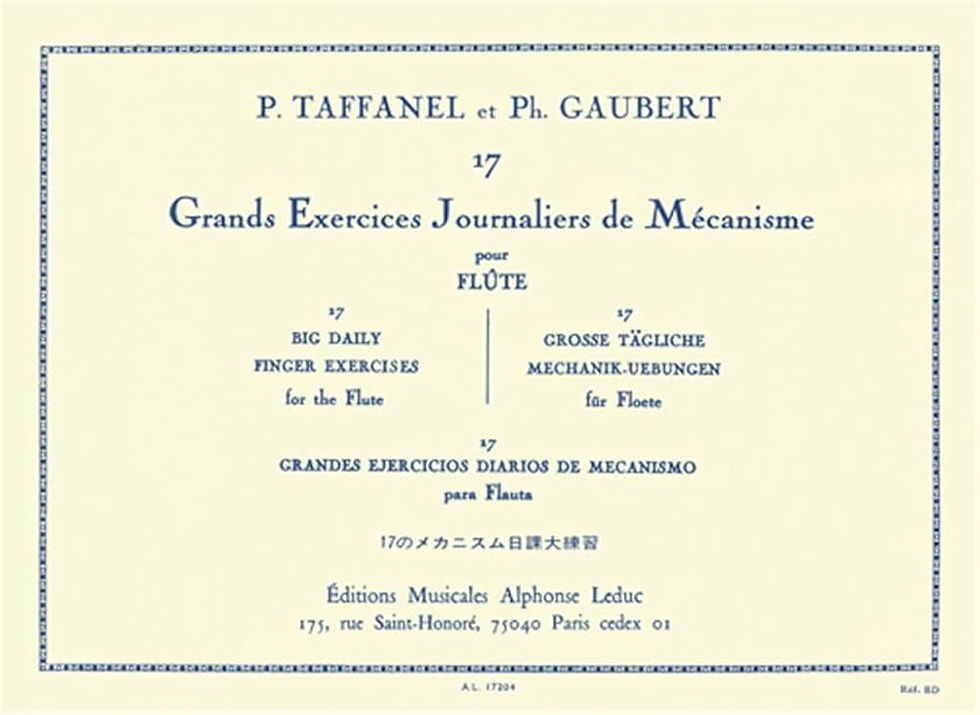
Many flutists start out with the best of intentions and struggle to maintain consistency when practicing De La Sonorite. One helpful approach for me is to start out my day playing my other warm up books, Maquarre's Seven Daily Exercises and Taffanel and Gaubert's 17 Daily Technical Exercises. Once my fingers ( and brain) are warmed up and my body is engaged, I can then give careful attention to my long tone practice. I encourage flutists to take their time when adding on new sound exercises. Building endurance is important, but it's also a gradual process. Playing long tones for two hours a day without preparation can cause frustration and exhaustion. Creating a beautiful flute tone is a lifelong endeavor. Patience is crucial, and small steps are important!
While they seem simple or perhaps even mundane, long tones are one of the most important parts of a flute warm up routine. By actively participating in the slow work of these exercises, we continue to cultivate a flute sound that breathes life into the music that we interpret!
Happy practicing!


Comments